
Why Muscle Tension Starts with the Nervous System
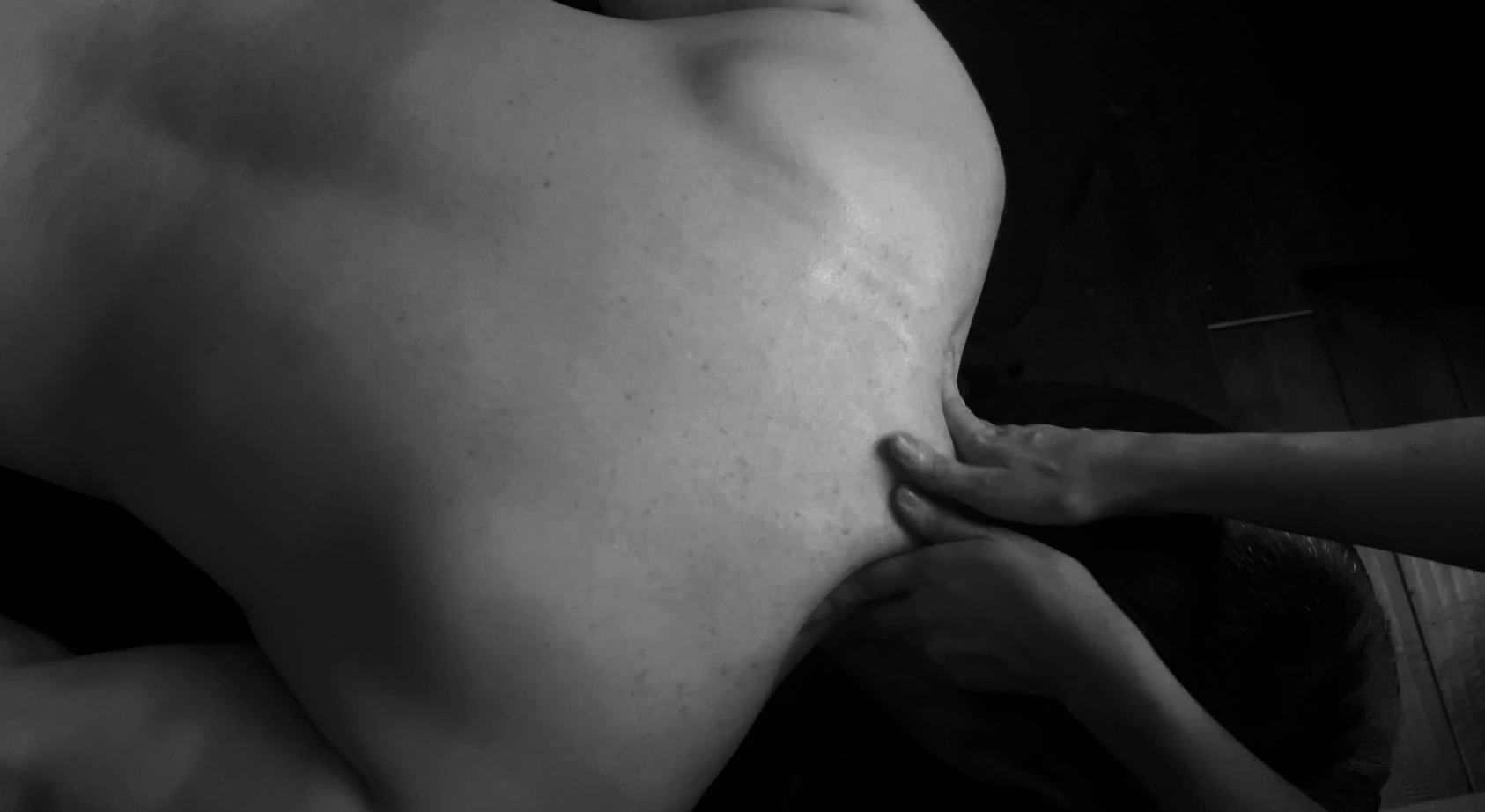
“Deep force often addresses the symptom while leaving the underlying signal unchanged.”
TL;DR – The Heart of It:
Tension is neurological, not mechanical: Chronic muscle tightness is a protective bracing response managed by your nervous system, meaning traditional physical force or deep tissue pressure often triggers more defense rather than lasting relief.
Regulation over relaxation: True somatic release cannot be forced through a "no pain, no gain" approach. It requires deep safety, slower pacing, and intentional stillness to teach the nervous system to drop its guard.
The body holds your story: Your tissues directly absorb and store emotional stress, grief, and hypervigilance as physical postures, adapting completely to your real, lived experiences.
You have tried everything for that chronic tightness in your shoulders. There is the foam rolling, the stretching and maybe even regular massage appointments when you can afford them. For a little while, it feels better. The knot softens and the ache dulls. You can finally turn your head without a sharp pull. Then a few days pass and the tension returns to the exact spot with the exact intensity. It feels as if your body never received the memo that it was supposed to stay loose.
After years of working with people in this exact position, the pattern becomes clear: Muscle tension is not a mechanical problem.
The tightness you feel reflects the state of your nervous system. It is rarely about a muscle that simply needs lengthening or a trigger point that requires more force. Your muscles are responding to subconscious signals that tell your body to brace, guard or prepare for impact. If the root cause is not mechanical, the physical solution cannot be either.
Your Nervous System Is Running the Show
Your nervous system has one primary job: to keep you alive. To do that, it constantly scans your environment for signs of threat or safety completely outside of your conscious awareness. Nobody decides to tighten their shoulders when walking into a stressful meeting. No one chooses to clench their jaw while lying in bed thinking about tomorrow's obligations. The nervous system makes those calls in real time based on what it perceives.
When your system registers a threat—whether it is an immediate physical danger, an emotional stressor, or a familiar traumatic pattern from your past, it shifts your body into a protective state. The fastest way the system protects you is through muscular bracing. Muscles tighten to stabilize your skeletal frame and guard vulnerable areas.
If that sense of threat or instability becomes chronic, your body treats the tension as your new normal. What began as a temporary protective response becomes your baseline structural posture. The elevation in your shoulders persists. The tension in your jaw continues. Even when you are sitting on the couch, your lower back holds a low-grade brace.
This is why traditional stretching and deep-tissue force provide only temporary relief. The tissue might soften under heavy pressure, but the muscle is still living under a specific state of neurological survival. If your nervous system perceives a continued need for protection, it will recreate that tension minutes after the session ends. The relief does not stick because the underlying signal has not changed.
Can You Force Your Body to Let Go?
There is a critical difference between regulation and relaxation that most people miss. Relaxation is a temporary state you create through conscious effort. You take a deep breath, drop your shoulders, and try to let go.
Regulation is your nervous system's ability to move fluidly between states of activation and rest without getting stuck in either extreme. When your body is regulated, muscles soften naturally. They respond to what is happening in the current moment instead of bracing against what might happen next. The system stops wasting vital energy on protective readiness.
Here is the challenge: You cannot force your nervous system to let go. The body does not release because you tell it to, or because someone applies an agonizing amount of pressure. Our culture loves the phrase "no pain, no gain." We have been conditioned to believe that if a treatment hurts, it must be fixing something.
Traditional physical therapies often treat the human body like a machine. A mechanic can force a machine part into place and it will work for a little while. But our bodies are not inanimate objects. In the treatment room, heavy force actually inhibits progress. Heavy pressure is frequently just another physical threat for an already fried nervous system to brace against. Intensity is not release. You cannot force open a door that is locked from the inside.
True release happens only when your nervous system perceives enough safety to drop its guard. That perception is influenced by the quality of touch, the pacing of the work, your breath patterns and the environment around you.
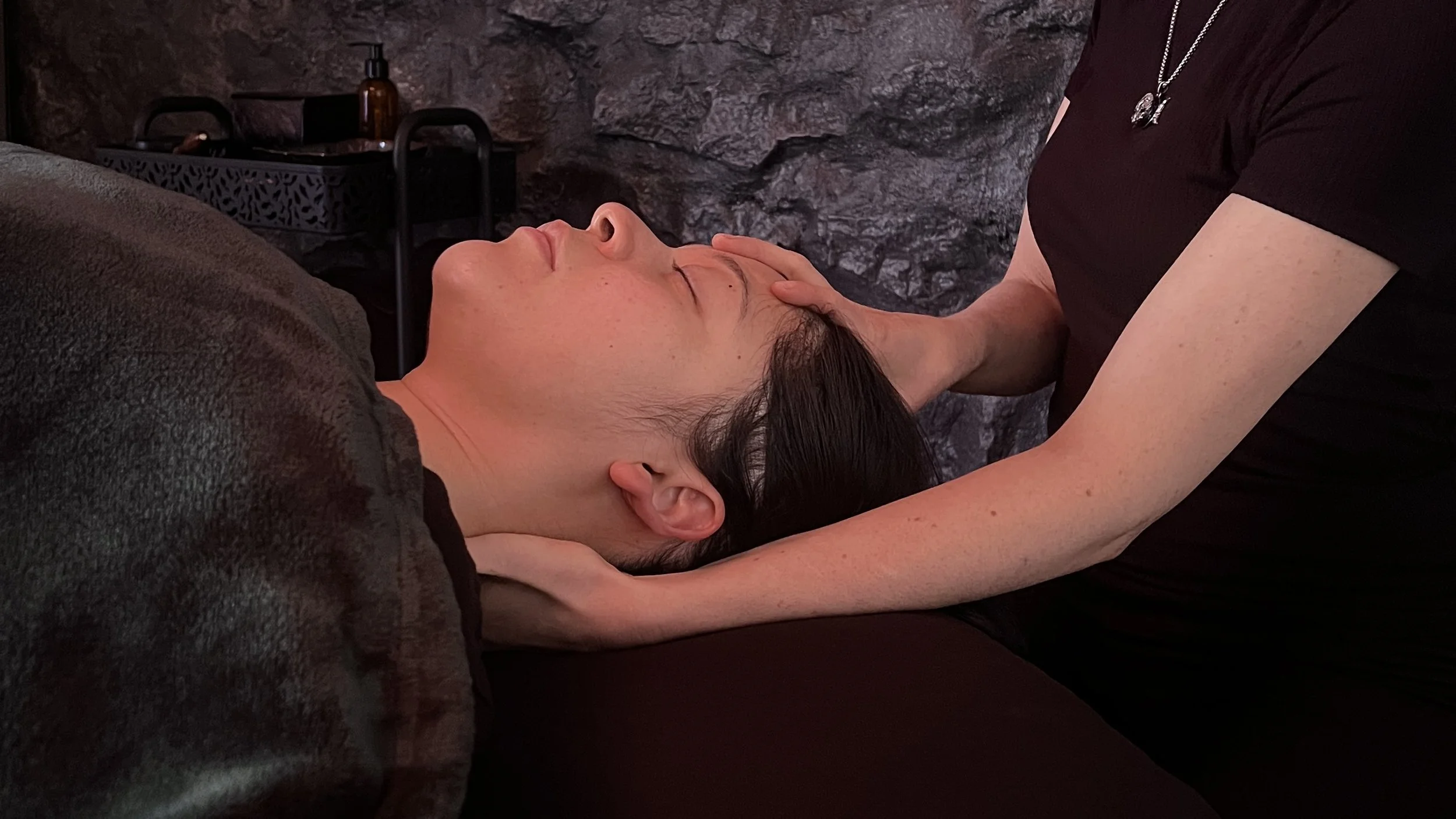
“An occipital release in session. Support allows the system to drop its guard.”
The Emotional Load Your Tissue Holds
Your body does not distinguish between an emotional load and a physical one. Both register as stress that requires physiological management. When you carry grief, your nervous system reads it as a threat to your stability. When you are burned out from months of overwork, your body interprets it as a lack of safety. Chronic hypervigilance from past experiences creates the exact same physiological response as an immediate, present danger.
Over time, these emotional states stop being temporary experiences and become physical patterns written directly into your tissue. The body simply learns to hold what you are living through.
These somatic patterns are remarkably consistent across the people I work with:
Grief settles into the chest as a perpetual physical heaviness and a tight diaphragm that cannot fully exhale.
Burnout and Chronic Responsibility live in shoulders that stay slightly elevated, carrying too much for too long.
Hypervigilance creates a jaw that stays clenched even during sleep, acting as a storage site for unexpressed needs.
Vulnerability causes the pelvis to hold deep tension, bracing against perceived instability.
Your body adapts to the life you are actually living, not the one you wish you were living. The tightness you feel is not a structural failure; it is your body's truthful, physical response to your lived experience.
Supporting the System Instead of Fighting It
Once you understand this connection, the focus shifts from trying to fix tight muscles to creating the precise conditions where your nervous system can downshift.
Supporting regulation requires an entirely different approach to bodywork. The pacing is intentionally slower. Rushing a session triggers protection. A slower pace gives your autonomic nervous system the space it needs to process the contact and downshift out of fight-or-flight.
Strategic intensity matters. While deep pressure feels productive in the moment, gentler approaches [like manual lymphatic drainage or craniosacral therapy] bypass the body’s defense mechanisms entirely. They speak directly to the foundation without activating your somatic alarms.
Agency and choice are essential. When you have total control over what happens to your body, your nervous system registers that choice as safety. Trust allows for a deeper release than force ever could.
Think of this process like learning to play an instrument. One intensive practice session will not make you fluent. Consistency plays a far bigger role than intensity ever could. A single deep session might change a muscle for a day, but regulation is a skill your nervous system learns through repeated experiences of safety. Each time your body experiences a session and comes out feeling whole, it builds slow evidence that softening is safe.

Nervous system regulation is a practiced skill, built through slow, deliberate experiences of stillness.
The Necessity of Stillness
The wellness industry loves to package these concepts into the phrase "self-care." A more accurate word for what the nervous system actually requires is Stillness.
Our society views slowing down as a weakness. Stillness can even feel terrifying to a system that is completely addicted to constant movement and survival. Yet, true downshifting requires us to stop forcing results.
The end goal is not to eliminate all tension from your body. You need the capacity to tighten, react, and protect yourself when a situation truly calls for it. What you are working toward is flexibility. You want a nervous system that can move between activation and rest based on what is happening right now, rather than staying locked in one protective mode.
What Happens When You Finally Listen
The tightness you feel is not a mechanical failure that needs a mechanic. It is valuable information about what your nervous system has been managing for you. Your body has been doing exactly what it needed to do to keep you safe. The tension served a beautiful purpose.
Now, the question changes from "How do I fix this?" to "What does my nervous system need to feel safe enough to release what is no longer necessary?"
That single question opens up physical possibilities that force never could. It invites you to listen rather than push. When you finally create the conditions for your nervous system to regulate, the tension softens on its own. The change happens because your body finally has permission to let go.
This perspective changes the entire intention of my bodywork practice.
The endless cycle of temporary relief and immediate snapback is exhausting. True progress requires a different path. Lasting change occurs when we create a space quiet enough for your nervous system to downshift.
My private practice prioritizes this foundational regulation. I utilize intentional pacing, trauma-informed touch, and true stillness to help your body remember what real safety feels like.
Your system may finally be ready to drop its guard. I invite you to step into the studio.
