
The Somatics of Spring: Emergence Beyond Achievement
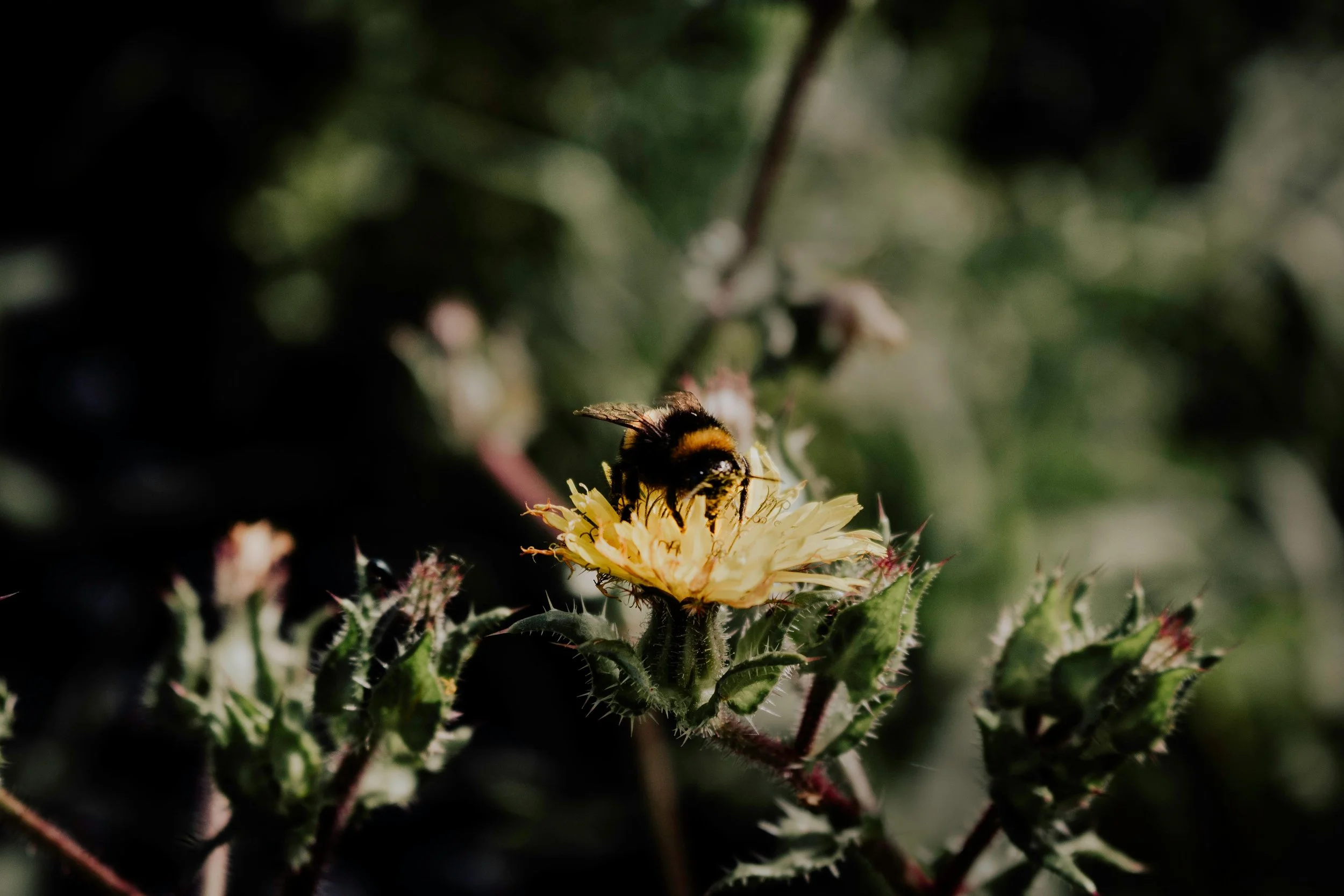
TL;DR – The Heart of It:
A nervous system under sustained pressure does not malfunction. It adapts. Somatic work is the process of making it safe enough to adapt again.
Real resilience is built through cycles. Eliminating rest from the equation does not produce more capacity but actually depletes it.
Emergence is a biological process, not a mindset. The conditions have to be right before the system will move.
The Spring Equinox: A Moment of Balance in a World of Acceleration
Twice a year, the earth arrives at a point of perfect equilibrium. The sun crosses directly over the equator, and for one suspended moment, day and night hold equal weight before the tilt continues forward. It is a threshold, not a destination. Balance and then becoming.
The Spring Equinox is easy to rush past. Culture tends to reframe it as a productivity cue, a prompt to set intentions or begin something new. But before we move into spring as a season of action, there is something worth noticing in the pause itself. In the nervous system, this kind of equilibrium has a name: homeostasis. It refers to the body's continuous effort to maintain internal stability, regulating temperature, stress load, breath rhythm, and muscle tension in an ongoing, largely unconscious negotiation. The equinox, in a way, makes that process visible. The earth recalibrating before moving forward.
We live in a culture that treats acceleration as the default setting. There is always more to optimize, more ground to cover, more output to generate. The idea of genuinely pausing can feel almost counterintuitive when momentum has become the measure of everything. But the body operates on older rhythms than cultural expectations, and it will find its own way back to balance regardless of whether we cooperate. The question worth sitting with, as this particular threshold arrives, is a simple one: what does equilibrium actually feel like in your body right now?
Why Does the Body Enter a "Protective Winter"?
There is a specific kind of exhaustion that does not register on any lab panel. It belongs to people who have been functioning at a high level for a sustained period, meeting demands, staying consistent, holding things together, while somewhere beneath that surface, the nervous system response has been quietly doing something else. Bracing. Conserving. Waiting.
Somatic healing addresses exactly this layer. The word somatic refers to the body and its lived physical experience, but somatic work is less concerned with the body as a structure and more with the nervous system as a record. Chronic stress, prolonged pressure, and unprocessed experience are not stored abstractly. They live in tissue, in breath patterns, in posture, in the reflexive tension that accumulates so gradually it begins to feel like a personality trait rather than a response.
When the nervous system has been under sustained load, it does what any adaptive system does: it reorganizes around protection. Persistent muscle tension, emotional flatness, low-grade anxiety that has come to feel like a baseline, a vigilance that presents as high functioning but is quietly exhausting to maintain. These are not signs of dysfunction. They are signs of an intelligent system doing precisely what it was designed to do in the presence of ongoing demand. The body protected itself. The difficulty is that protection, once activated, does not automatically deactivate when the original stressor resolves. The system stays braced, waiting for a signal of safety that may never arrive on its own.
Permafrost is a useful image here. Ground frozen so deeply and for so long that surface warmth alone is not enough to reach it. The thaw, when it comes, moves slowly and from the outside in. The body's protective patterns work similarly. They do not release on command. They release when conditions change.
This is worth naming clearly because so much of the available language around healing implies that the body is something to be corrected or overcome. Somatic work operates from a different premise entirely: that the body's responses are coherent, that protection made sense when it was established, and that the nervous system will soften when the conditions support it. Understanding that premise changes the relationship a person has with their own experience, and that shift in relationship is often where genuine change begins.

The Thaw: How Somatic Work Allows the Body to Emerge
The nervous system does not respond to effort the way the mind does. This is one of the more disorienting discoveries for people who come to somatic work after years of disciplined self-improvement. They are committed, self-aware, and genuinely motivated to change. And yet the body remains unmoved, because the body is not waiting for motivation. It is waiting for safety.
Safety, in this context, is not an intellectual conclusion. It is a physiological state. The felt, physical sense that the environment is regulated, that demands are not escalating, that it is no longer necessary to brace. Somatic work creates the conditions for that state to become accessible. Gentle, attuned touch. A pace that does not ask the system to perform. Attention directed at the body's actual present-moment experience rather than at where it ought to be. These are not passive interventions. They are precise ones, designed to communicate to the nervous system, through the body's own language, that the protective winter can begin to loosen.
What follows tends to be incremental. A breath that settles lower in the chest than it has in years. A release of tension in the shoulders that holds this time rather than returning immediately. A moment of stillness that does not trigger urgency. These shifts are small in appearance and significant in meaning. They indicate that the system is beginning to reorganize, not because it was forced to, but because the conditions finally supported it.
What Happens to the Nervous System When We Never Allow a Winter?
High-achieving people rarely burn out because they lack discipline. More often, they burn out because their discipline is exceptional, applied without interruption, and the body eventually responds to sustained override the only way it knows how: by forcing a stop.
The nervous system is built for cycles. Periods of activation and periods of recovery. Output and integration. Sympathetic arousal and parasympathetic restoration. When willpower is used to sustain constant output across what should be natural cycles of rest, the system does not simply adapt and carry on. It accumulates a deficit. Sleep becomes less restorative. Emotional range narrows. The body's internal signals, hunger, fatigue, the early signs of overload, grow quieter and harder to read. People in this state often describe feeling simultaneously wired and depleted, driven by momentum rather than genuine energy.
Chronic sympathetic activation was designed for short-term, high-demand situations. Sustained indefinitely, it becomes the source of the very exhaustion it was meant to help navigate.
The cultural framing of rest as reward compounds this. Rest positioned as something earned after sufficient output is rest treated as optional, contingent, and secondary to productivity. Physiologically, that framing is incorrect. Recovery is not the reward at the end of a cycle. It is the mechanism that makes the next cycle possible. Resilience is not built by eliminating the contractions. It is built by moving through them fully and allowing the expansion that follows.
The Sensory Threshold: What Healing Actually Feels Like
Spring does not arrive as an event. It accumulates.
The light shifts before it is consciously noticed, arriving a few minutes later each evening, landing at a slightly different angle in the morning. In the high desert, this shift is particularly distinct — the quality of light in Santa Fe at the equinox carries a clarity that is hard to describe and easy to feel. The air changes in quality before it changes in temperature. There is a particular quality to this transitional season, a stillness that carries anticipation rather than heaviness, a sense of something present just beneath the surface, preparing to move.
Nervous system recovery has a similar texture. It does not announce itself. It surfaces in small perceptual shifts that are easy to overlook when the habit of monitoring for output has been long established. Breath that settles more easily. A returning interest in things that had felt flat. The impulse to move the body in ways that feel exploratory rather than obligatory. Emotions that had narrowed beginning to expand again, not dramatically, but perceptibly. Small pleasures that had gone unnoticed quietly returning to register.
These are meaningful signals. They indicate that the system is moving out of a protective state, that the internal environment has shifted enough to allow something other than vigilance. They tend to arrive quietly and are worth slowing down to recognize, because in a culture oriented toward measurable progress, the early signs of genuine regulation are easy to dismiss as insufficient.
Spring does not instruct the frozen ground to thaw. It arrives with enough consistency and warmth that thawing becomes the natural response. That is the quality of attention that somatic work brings to the nervous system. And it is the quality of attention this particular season invites us to bring to ourselves.
There is something significant about doing this work in alignment with the season rather than against it. The body is already oriented toward emergence right now. The light is already shifting. The biological cues are already present. Somatic work in spring meets an impulse that is already there, supporting it with the right conditions and allowing the body's own intelligence to do what it has always known how to do.
Emergence follows from conditions, not force. That is the work. And that is the season we are in.
🌙 When Your Ready, the Work is Here
If you are based in Santa Fe or the surrounding area and something in this post resonated, a session at Veluna Wellness may be a natural next step. Each session is held in a private, quiet space designed specifically to support nervous system regulation, drawing on trauma-informed massage, myofascial release, craniosacral therapy, and holistic bodywork rooted in somatic principles. Spring is, practically speaking, one of the better times to begin this kind of work. The body is already oriented toward emergence. The season is already doing part of the work.
I respond personally to all inquiries and will help you find the session that fits where you are right now. You can reach out or book directly at velunawellness.com/book-appointment.
