
What Trauma-Informed Care Really Means (And What It Doesn’t)

“Safety doesn’t announce itself. It arrives quietly.”
TL;DR – The Heart of It:
Trauma-informed care is not about processing trauma. It is about creating conditions that support nervous system safety, pacing, and choice without overwhelming the body.
Emotional intensity or release is not a reliable measure of healing. Regulation, steadiness, and feeling more intact afterward often matter more.
True trauma-informed care is grounded in clear boundaries, structure, and respect for scope, not promises of depth or transformation.
Why “Trauma-Informed” Needs Clarification
The phrase trauma-informed has become a kind of shorthand in wellness spaces. It appears on websites, intake forms, and social media bios as a quiet promise of safety. For many people, especially those who have felt misunderstood or overwhelmed in care settings before, that promise matters. It suggests gentleness, awareness, and an intention not to harm.
At the same time, the more widely the term is used, the less clear it has become. Trauma-informed is often offered as reassurance without much explanation of what it actually means in practice, or just as importantly, what it does not. Over time, the phrase has taken on an emotional meaning rather than a precise one. People are left to assume it means a practitioner can hold whatever comes up, emotionally or physically, even when that may not be true.
This lack of clarity rarely comes from bad intent. Most practitioners who use the term genuinely care about being respectful and safe. The issue is that trauma-informed has quietly expanded to cover far more than it was ever meant to. When language stretches beyond scope, confusion follows, and confusion in vulnerable settings can lead to experiences that feel unsettling rather than supportive.
Clarifying the term is not about criticism or gatekeeping. It is about honesty. Clear language helps people make informed choices about their care and protects both clients and practitioners from mismatched expectations, especially when seeking care such as trauma-informed massage in Santa Fe, where trust and clarity matter deeply.
What Does Trauma-Informed Care Actually Mean?
At its core, trauma-informed care is not a technique, modality, or promise of transformation. It is an orientation. It begins with the understanding that many people carry stress, shock, or overwhelm in their nervous systems, whether or not they identify it as trauma. Because of that, care is shaped to reduce the likelihood of triggering threat responses in the body.
In practice, trauma-informed care emphasizes pacing, consent, predictability, and respect for personal boundaries. It prioritizes regulation over intensity and safety over emotional depth. Rather than trying to access or resolve trauma, it focuses on creating conditions where the body does not feel rushed, coerced, or overridden. This kind of approach supports nervous system regulation by allowing the body to remain oriented to the present moment.
Often, what matters most is not what happens during a session, but what does not happen. There is no pressure to go deeper, feel more, or make something meaningful occur. The nervous system is allowed to stay present, even if that moment feels quiet or unremarkable.
Trauma Lives in the Body, Not Just the Past
Trauma is often misunderstood as something that lives primarily in memory. A specific event that can be recalled, explained, or processed through insight. In reality, trauma lives in the nervous system, in the patterns the body learned when something felt overwhelming or unsafe.
This is why someone can feel guarded, numb, restless, or unable to relax without being able to point to a single cause. The body does not measure threat through logic or timelines. It responds through sensation, pacing, tone, and proximity. Touch, silence, or unexpected transitions can register as either safe or threatening depending on how the nervous system has been shaped.
Neuroscience and somatic research have shown that stress responses such as fight, flight, freeze, or shutdown can persist long after an event has passed, even when a person consciously feels fine. The body remembers through tension and vigilance not because it is broken, but because it is trying to prevent harm from happening again.
Understanding trauma this way shifts the focus away from uncovering or fixing something and toward noticing how the body responds in the present. It also explains why body-based environments need to be thoughtful even when no trauma history is disclosed. A nervous system does not need a story in order to react.

“The body carries what words never had to.”
What Trauma-Informed Care Is Designed to Prevent
Seen through this lens, trauma-informed care is less about healing trauma and more about preventing unnecessary nervous system activation. Its role is largely preventative. It aims to reduce the likelihood that care itself becomes another source of overwhelm, loss of control, or internal bracing.
This is where restraint matters. Moving too quickly, pushing for depth, or assuming discomfort is productive can unintentionally recreate the same conditions the body learned to fear. Even when intentions are good, intensity can overwhelm a nervous system that is already on alert.
Trauma-informed care slows things down enough that the body can stay present rather than slipping into defense. Often, the most ethical choice is not to do more, but to do less. To allow space. To respect subtle signals. To let safety build quietly instead of forcing a breakthrough.
Why Trauma-Informed Does Not Mean Trauma Therapy
One of the most common misunderstandings around trauma-informed care is the assumption that it is a form of trauma treatment. The words sound close enough that it is easy to blur the line, but in practice they serve very different roles.
Trauma therapy is designed to help people process traumatic experiences. It requires specialized training, clinical frameworks, and the ability to support what may surface emotionally or psychologically over time. Trauma-informed care does not aim to process trauma at all. Its role is to shape an environment so that care does not inadvertently overwhelm or destabilize the nervous system.
This distinction matters deeply in wellness and body-based settings, where sensation and touch can stir emotions before the mind has time to interpret what is happening. Trauma-informed care acknowledges that possibility while respecting professional limits. It creates safety through pacing, choice, and containment, not through interpretation or emotional guidance.
Clear scope is not a limitation. It is a form of care. Knowing what a space is designed to offer allows people to engage without the pressure to go somewhere they did not intend to go.
Is Emotional Release a Sign of Healing?
In many wellness cultures, emotional release is treated as proof that something meaningful has happened. Tears, shaking, or intense sensation are often framed as breakthroughs, even when the experience feels unsettling afterward. While emotional release can occur naturally, it is not a reliable measure of healing on its own.
The nervous system does not equate intensity with safety. In some cases, strong emotional activation mirrors the same overwhelm the body learned to protect against in the first place. Without proper support and integration, release can leave someone feeling raw, disoriented, or disconnected rather than restored.
Trauma-informed care does not avoid emotion, but it does not chase it either. The goal is regulation, not catharsis. A session that feels steady, neutral, or quietly grounding may be doing far more for the nervous system than one that feels dramatic in the moment.
Healing often looks subtle. It shows up as the ability to stay present, soften without bracing, or leave a session feeling more intact than when you arrived.

“Feeling something doesn’t mean you need to release it.”
Trauma-Informed Care Is About Structure, Not Softness
Safety is often mistaken for gentleness. In wellness spaces, this can show up as a focus on soothing language, dim lighting, or a soft emotional tone. While those elements can be supportive, they are not what creates safety on their own. For the nervous system, safety comes from structure.
Knowing what will happen, how long it will last, and what is expected reduces the need to stay on alert. A session with a predictable rhythm allows the body to settle because it does not have to guess what comes next. This kind of safety is quiet and practical rather than emotional or intimate.
Trauma-informed care understands that boundaries are stabilizing. Clear roles, consistent timing, and transparent communication reduce cognitive and emotional load. Structure allows softness to land. Without it, even gentle experiences can feel confusing or unsettling.
Why Do Choice and Agency Matter So Much?
Choice is a central pillar of nervous system safety. Consent is not just a one-time agreement at the beginning of a session. It is an ongoing sense of agency throughout the experience.
When the body knows it can adjust, pause, or opt out without consequence, it is far more likely to stay present. Even subtle choices, such as being informed before a transition or being invited rather than directed, reinforce this sense of control. Over time, trust is built through consistency, not intensity.
Structure provides containment. Choice provides autonomy. Trauma-informed care relies on both working together.
Why This Matters in Massage and Body-Based Work
Touch carries meaning whether we intend it to or not. For many people, being touched involves vulnerability that goes beyond relaxation. The body is asked to receive, soften, and trust, often while lying still in an unfamiliar space.
In massage and body-based work, this makes trauma-informed care especially important. Touch can support regulation, but it can also activate protective responses if pacing, communication, or consent feel unclear. The body responds to pressure, proximity, and timing before the mind can interpret what is happening.
This is why people often seek out trauma-informed massage in Santa Fe when they want care that respects the nervous system rather than pushing past it. Thoughtful pacing and clear transitions allow the body to stay present rather than bracing or checking out.
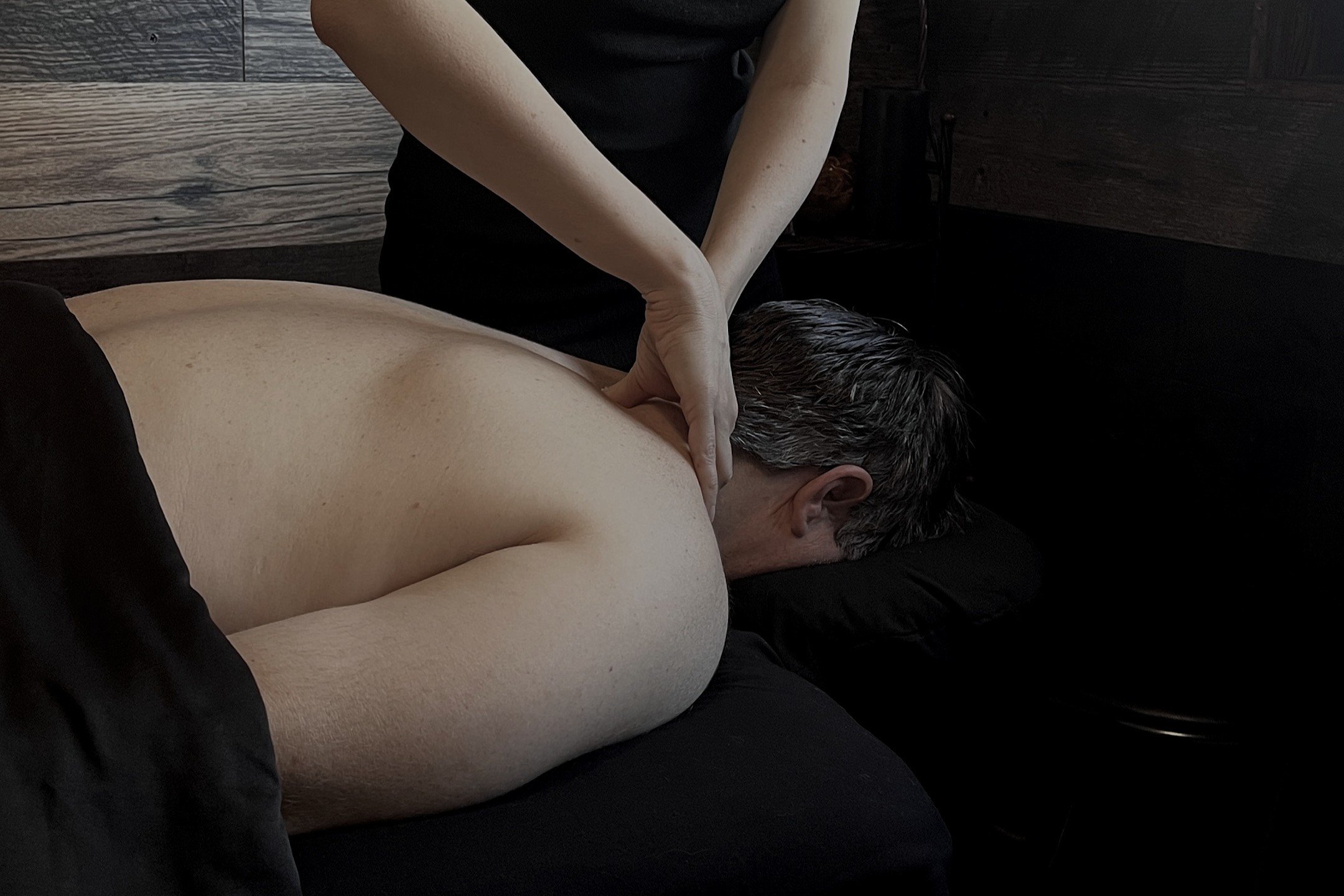
“Touch can regulate, or it can overwhelm. The difference is how it’s offered.”
What Does a Trauma-Informed Session Often Feel Like?
One of the surprising things about trauma-informed bodywork is how unremarkable it can feel. There may not be an emotional release or dramatic shift. Instead, the experience is often steady, grounded, and quietly regulating.
The nervous system knows what is coming and does not need to stay alert. Sensation is introduced gradually, without pressure to tolerate more than feels comfortable. Silence is allowed without becoming heavy. There is no expectation to perform relaxation or insight.
People often leave feeling more intact than changed. More settled. More at home in their bodies. For a nervous system that has spent years guarding or bracing, subtlety is often exactly what allows healing to take root.
Why Naming Limits Is an Act of Care
In wellness culture, there is often pressure to be everything to everyone. To reassure. To hold. To promise more than what is actually being offered. But clarity is one of the most caring things a practitioner can provide.
When limits are named clearly, clients are not left guessing or projecting expectations onto the space. There is less risk of feeling exposed or destabilized by an experience that went further than anticipated. Limits create containment and support informed consent rather than hope or assumption.
Trauma-informed care respects autonomy and the nervous system’s pace. It also acknowledges that healing does not happen through a single session or a single relationship. No one space should be asked to carry that much weight.
What Trauma-Informed Care Ultimately Offers
Trauma-informed care invites a longer view of healing. One that moves away from instant shifts and dramatic outcomes and toward gradual change that can be integrated and sustained. Safety builds through repetition. Regulation develops through consistency. Trust forms over time.
At its heart, trauma-informed care offers a way of being with the body that does not rush, interpret, or demand anything from it. It creates space for the nervous system to stay present rather than brace or perform.
What it ultimately offers is not a dramatic experience, but a respectful one. Clear boundaries. Grounded expectations. A body that is trusted to move at its own pace. In a culture that often equates healing with effort or emotional depth, trauma-informed care makes room for something quieter and more sustainable. It allows people to arrive as they are and leave feeling more intact than when they came.
If this perspective on trauma-informed care resonates, it’s likely because your body is already attuned to the kind of pacing and clarity this work values. Veluna Wellness is opening soon, and sessions are designed with this same orientation toward nervous system safety, structure, and respect for the body’s timing.
If you’d like to be notified when booking opens, you’re welcome to join the waiting list. There’s no rush and no pressure. It’s simply a way to stay connected and be the first to know when sessions become available.
