
The Feminine Wound of Performance
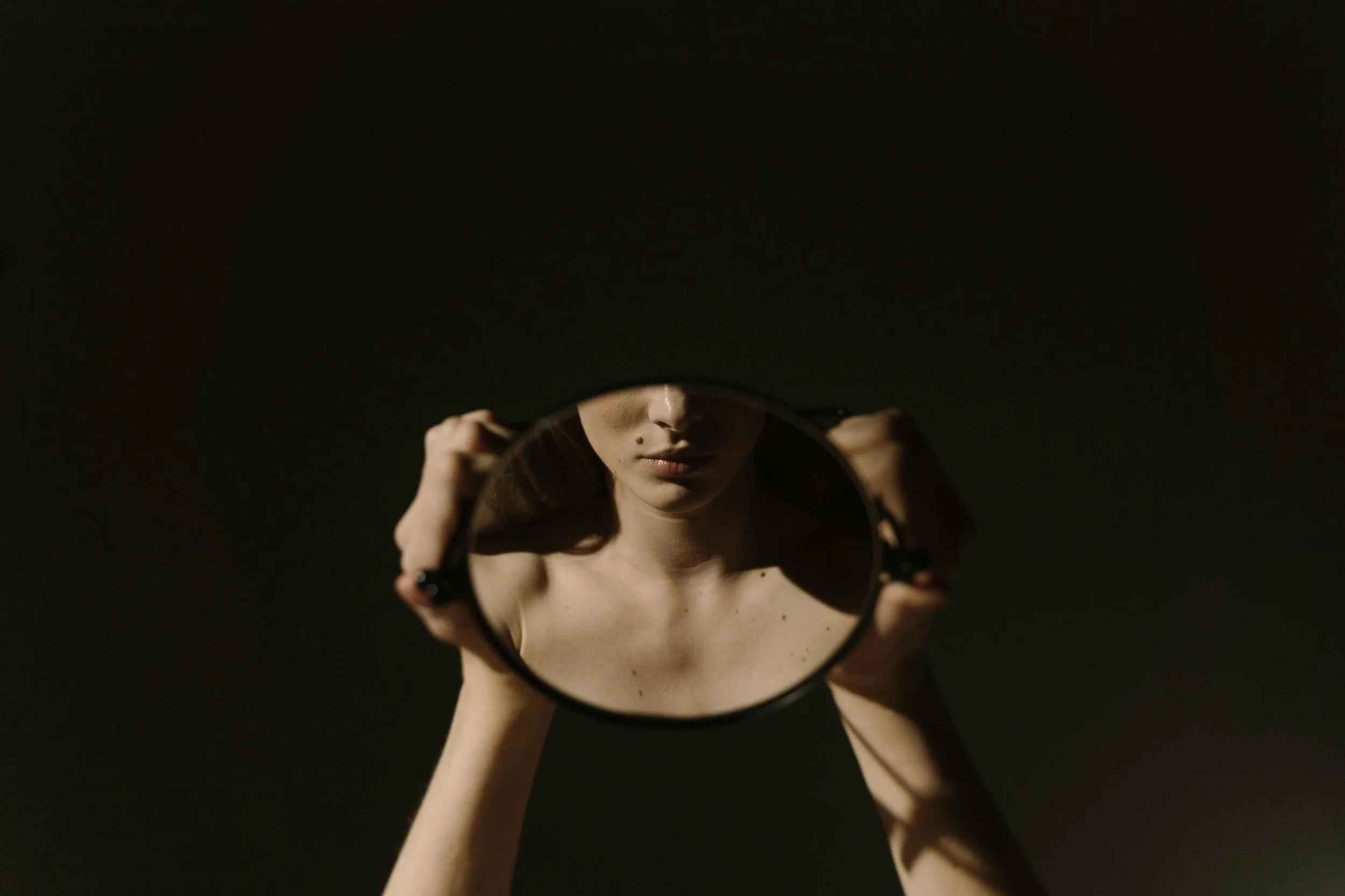
“Performance begins when attention turns outward before it turns inward.”
TL;DR – The Heart of It:
The feminine wound of performance isn’t about vanity or attention, it’s a nervous system adaptation rooted in safety, approval, and survival.
Embodiment begins when femininity returns to the body, not the audience, shifting from presentation to presence.
Real healing is quiet and regulating, marked less by how it looks and more by how safe the body feels.
When Femininity Becomes Something You Do, Not Something You Are
Many women don’t realize how tired they are until they stop performing. Not physically tired. Nervous-system tired. The kind of exhaustion that comes from constantly monitoring how you’re coming across, how you’re being read, whether you’re pleasing, impressive, attractive, palatable, or “doing it right.” It often shows up as a low-grade tension in the body, a sense of always being slightly on, even in moments meant for rest.
For many women, femininity slowly becomes something you do rather than something you inhabit. Not because you’re shallow or inauthentic, but because performance is adaptive. It’s a survival strategy learned early, reinforced often, and rewarded consistently. You learn, sometimes quietly, that being seen a certain way brings safety, approval, or belonging. So you shape yourself accordingly, often without realizing it.
This isn’t a personal failure or a lack of self-awareness. It’s a cultural and nervous-system pattern. When performance becomes the primary way of relating to the world, the body stays vigilant. Over time, presence gets traded for presentation, and the cost shows up as chronic tension, burnout, and a subtle sense of disconnection, even when everything looks “fine.”
This is what I mean by the feminine wound of performance. Not something broken in women, but something burdened. For many women navigating high-achievement cultures and fast-paced wellness spaces, including places like Santa Fe, this constant performance can feel invisible, yet deeply embodied.
What Is the Feminine Wound of Performance?
The feminine wound of performance isn’t about women being fake, shallow, or inauthentic. It’s about what happens when femininity becomes something you manage instead of something you live inside. Performance is outward-facing. It’s the constant tuning of tone, appearance, energy, and emotion based on how you might be perceived.
Embodiment, by contrast, is inward-facing. It’s being rooted in sensation, intuition, and internal cues, letting the body lead rather than the audience. When you’re embodied, you aren’t asking who you need to be in a moment. You’re responding from where you already are.
This difference matters because performance keeps the nervous system on alert. When you’re performing, part of you is always watching yourself. Am I okay? Am I enough? Am I being received? Embodied femininity doesn’t ask those questions as often. It’s quieter, slower, and more contained. It may feel less impressive, but it’s far more real.
This wound isn’t a conscious choice. Most women learn it early, often before they have language for it. You notice what gets approval. You sense what feels safer. You adapt. Over time, that adaptation can harden into identity. The body learns to stay slightly braced, even during moments meant for rest.
Naming the feminine wound isn’t about blame. It’s about recognizing how deeply learned this pattern is, and why returning to embodied femininity can feel unfamiliar at first, even when it’s what the body has been asking for all along.
When Did Femininity Start Feeling Like a Role?
Femininity often starts feeling like a role long before we realize we’re playing one. For many women, it begins in childhood through subtle social mirroring. You notice what gets smiles, praise, softness, protection. You also notice what doesn’t. Little by little, approval starts to feel safer than authenticity.
Girls are often rewarded for being agreeable, pleasant, emotionally attuned to others, even before they’re taught how to attune to themselves. The message isn’t usually explicit. It lives in tone, body language, what’s encouraged and what’s quietly corrected. Over time, emotional regulation gets outsourced to performance. Instead of asking, “What am I feeling?” the question becomes, “How should I be right now?”
This is how performance becomes automatic. The nervous system learns to scan outward for cues rather than inward for signals. You adjust before you reflect. You manage yourself before you inhabit yourself. And because this adaptation once helped you belong, it doesn’t feel like a problem. It just feels normal.
The shift from lived femininity to performed femininity isn’t a conscious decision. It’s a learned reflex. One that made sense at the time, and one many women carry into adulthood without ever naming it.

“Roles are learned quietly, long before they’re questioned.”
Performance vs Embodiment: What Is the Difference?
Performance and embodiment aren’t personality traits. They’re nervous-system states the body moves between, often without us realizing it.
Performance is outwardly oriented. Attention is directed toward how you’re being perceived, how you’re landing, how you should adjust. There’s a subtle vigilance to it. Even when it looks confident or polished, the body is working. Muscles hold. Breath shortens. Awareness floats just outside yourself, tracking the room and the response.
Embodiment is inwardly oriented. Attention returns to sensation, rhythm, and internal cues. Instead of scanning for feedback, the body becomes the reference point. There’s containment here. Less effort. Less self-monitoring. You’re not trying to manage an impression. You’re inhabiting yourself.
Physiologically, these states feel very different. In performance, the nervous system often leans toward activation. In embodiment, there’s more parasympathetic tone. Breath deepens. The jaw softens. The body registers safety not because everything looks good, but because nothing needs to be managed.
Performance can masquerade as confidence, self-expression, or even healing. Embodiment doesn’t always look impressive. It’s quieter. Slower. Sometimes almost invisible. But the body knows the difference.
Why Performance Is Rewarded in Modern Culture
Performance thrives in modern culture because it’s easy to see, easy to package, and easy to consume. We live inside aesthetic economies where visibility functions as currency. The more legible or immediately graspable something is, the more likely it is to be rewarded with attention. Presence doesn’t translate as cleanly through screens. Performance does.
Social media accelerates this pattern. Platforms favor what can be quickly understood without context: a look, a vibe, an identity, a moment of spectacle. Embodiment asks for time. It requires attunement, felt sense, and subtlety. Those qualities don’t stop a scroll. They unfold slowly, often off-camera.
From a nervous-system perspective, spectacle is stimulating. It delivers quick hits of novelty and certainty. Presence can feel ambiguous by comparison. It doesn’t announce itself or perform clarity. When performance is consistently rewarded, the underlying wound deepens. Women learn that being seen matters more than being felt, and the system adapts accordingly.
Even in slower, more contemplative places like Santa Fe, where people often seek meaning, healing, and depth, the pressure to curate an identity can quietly follow us into wellness and spiritual spaces.
The Nervous System Cost of Constant Performance
Constant performance comes with a physiological price, even when it looks polished on the outside. When a woman is regularly monitoring herself, adjusting her tone, managing her expression, or tracking how she’s being received, her nervous system stays in a low-grade state of activation. Not crisis-level, but vigilant.
Over time, attention fragments. Sensation dulls. Signals like hunger, fatigue, grief, or overwhelm become easier to override because the system is oriented toward output rather than input. This is one reason performance can feel energizing at first and depleting later. The body isn’t actually resting, even when activity stops.
Research on stress physiology consistently shows that sustained sympathetic nervous system engagement reduces the body’s ability to recover. This is why so many women say, “I’ve tried resting, and it didn’t help.” The issue isn’t rest. It’s that the nervous system never fully leaves performance mode.
Healing requires more than stopping activity. It requires shifting the internal orientation, from managing perception back to inhabiting the body.

“This is what holding it together looks like from the inside.”
Why Embodied Women Are Often Misread or Overlooked
Embodiment is quiet. It doesn’t announce itself, explain itself, or try to be understood. Because of that, embodied women are often misread in a culture trained to respond to volume, visibility, and emotional display.
Presence isn’t legible in the same way performance is. Maturity, containment, and regulation don’t translate well online or in fast-paced social spaces. An embodied woman may not overshare, posture, or emote on cue. From the outside, this can be mistaken for distance, when in reality her attention is simply rooted inward rather than broadcast outward.
Depth also gets misinterpreted. Stillness can feel unsettling to people accustomed to constant emotional feedback. There can be a loneliness that comes with embodiment. Being grounded doesn’t always mean being mirrored.
Is This the Same as Confidence or Self-Expression?
This is where the conversation often gets misunderstood. The feminine wound of performance isn’t a critique of confidence, creativity, or self-expression. It’s about where those qualities are coming from.
Confidence rooted in regulation feels steady. It doesn’t need constant reinforcement or reaction. You can feel it in someone’s pacing, their breath, the way they take up space without trying to dominate it. Performance-based confidence often rises and falls depending on how it’s received.
The same distinction applies to self-expression. Expression that comes from embodiment feels natural, even when it’s bold. It doesn’t feel urgent. There’s choice in it. Expression rooted in compulsion feels tighter, as if something needs to be proven through the act itself.
This isn’t about doing less or being quieter. It’s about noticing whether expression arises from presence or pressure. When self-expression is embodied, it nourishes. When it’s performative, it often leaves the nervous system more activated.
How the Wound Shows Up in Healing and Wellness Spaces
One of the more subtle places this wound shows up is inside healing and wellness spaces themselves. Especially spaces that look beautiful, sound insightful, and promise transformation, but leave people feeling unchanged or even more dysregulated.
Performance disguised as healing often looks like constant identity refinement. New language. New labels. New aesthetics. New rituals. There’s movement, but not always settling. Insight, but not always integration. A woman may feel like she’s “doing the work” while her nervous system stays vigilant.
I see this often among women drawn to somatic healing in Santa Fe — deeply intuitive, thoughtful women who are doing all the “right” practices, yet still feel slightly braced inside.
This is where aesthetic spirituality can quietly replace embodied practice. The environment may be stunning. The language sophisticated. But if the body isn’t invited to slow down, feel, and reorganize, the healing stays conceptual. Impressive, but not regulating.
Many women sense this mismatch intuitively. They leave inspired, but not grounded. Activated, but not soothed. It’s not that the work is wrong. It’s that performance was layered on top of healing instead of peeled away from it.
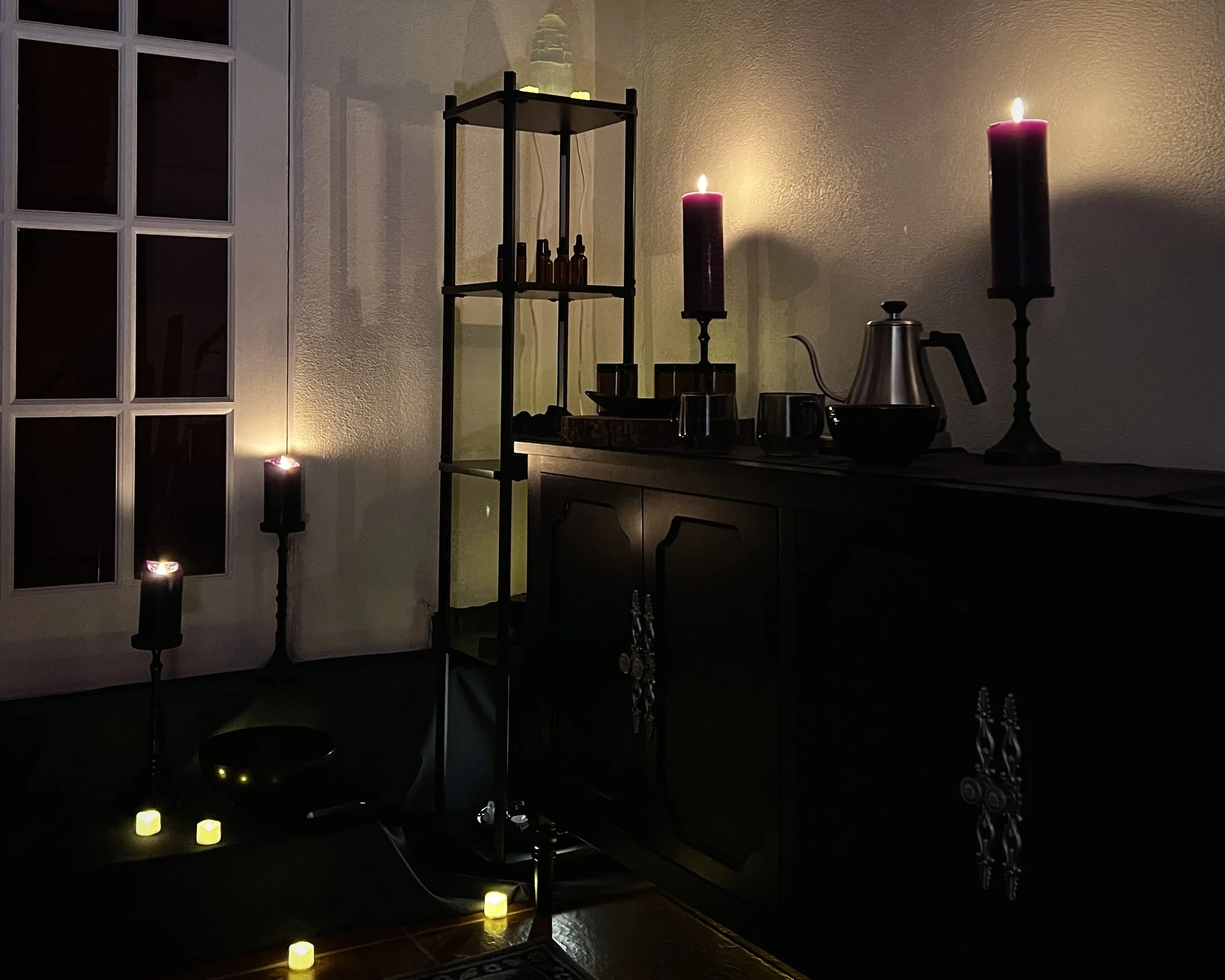
“If the body isn’t invited to arrive, change doesn’t settle.”
What Healing the Feminine Wound of Performance Actually Requires
Healing this wound doesn’t look like adding more practices, more language, or another identity to maintain. It often begins with doing less. Slowing isn’t passive. It’s a deliberate shift away from constant output and toward listening. Not listening for insight or meaning, but for sensation.
Re-inhabiting the body happens in small, almost unremarkable ways. Noticing when the jaw tightens. Feeling the breath drop lower without forcing it. Letting fatigue register before it turns into collapse. These moments don’t photograph well, and that’s part of the repair.
One of the harder pieces is releasing the need to be witnessed in order to feel real. Performance trains us to exist in relation to an audience, even an imagined one. Healing asks for something quieter. Letting experiences land without narrating them. Trusting that what’s happening internally matters even if no one else sees it.
Over time, the body becomes the primary reference point again. Decisions feel steadier. Energy stabilizes. There’s less urgency to explain, clarify, or justify. Healing the feminine wound of performance isn’t dramatic. It’s subtle, steady, and deeply regulating.
Reclaiming Femininity as Lived, Not Displayed
Reclaiming femininity doesn’t mean rejecting beauty, expression, or visibility. It means returning femininity to where it actually lives. Inside the body. In sensation, rhythm, intuition, and response. Lived femininity is felt before it’s seen.
When femininity is internal, there’s a quiet relief that settles in. The pressure to present, curate, or maintain an identity loosens. Expression remains, but it no longer carries the weight of proof. There’s more space to simply be with what’s happening inside.
This shift is subtle, which is why it’s often overlooked. Nothing dramatic announces it. Instead, it shows up in small, steady ways. A softer exhale. A clearer boundary. A reduced need to be impressive or understood.
Reclaiming lived femininity isn’t about arrival or resolution. It’s about containment. Staying present with yourself without display. Allowing femininity to be something you inhabit quietly, consistently, and on your own terms.
🌙 If this resonated, it’s likely because your nervous system already knows what it needs. I’ll be opening my practice for appointments soon, offering women’s bodywork in Santa Fe rooted in slow, trauma-informed, nervous-system-aware care. If you’d like to be notified when booking opens, you’re welcome to join the waiting list below.
